
How to Search Civil Dockets
Start at Kansas CaseSearch. Pick District. Then choose a search type: Case Number, Party Name, Business Name, or Party As Business Name. Set the county to Ottawa County. A Civil filter under case type keeps the results tight. Filling in filing-date fields also helps when a search pulls a long list. One human verification step stands between you and the results.
The strongest key is a full case number. Consider the format-only sample OT-2025-CV-000456: OT marks Ottawa, the four-digit year comes next, CV flags the civil type, and a six-digit sequence closes it out. That sample is not a real case. Name searches demand more care, since several parties can share a name. Compare roles and filing dates before trusting any first result.
- Select District and the exact search type.
- Enter the full case number or best party or business term.
- Choose Ottawa County and Civil, then add a filing period if helpful.
- Complete the human check and compare case number, type, filed date, parties, and status.
- Read the events in order and request a specific public filing if its document is absent.
Ottawa Civil Search Fallbacks
CaseSearch is not the only Ottawa County civil docket route. A public terminal at the courthouse can display information or documents the web portal leaves out. You can reach the Ottawa County District Court clerk at 307 N. Concord, Minneapolis, Kansas 67467. Or call 785-392-2917. The office keeps hours Monday through Friday, 8:00 a.m. to 5:00 p.m. It closes from noon to 1:00 p.m.
Need a specific public paper? File the Kansas Court Records Request Form. Name Ottawa County District Court. Also give the full case number, the exact title or event, and the filed date. Say whether you want inspection or a copy. The form lists email, mail, pickup, and fax preferences. The Ottawa clerk should confirm current options and estimate reasonable actual costs.
What a Civil Docket Shows
Think of an Ottawa County civil docket as an events index. Public fields may show the case number, subtype, filing date, status, parties and their roles, attorneys, judicial officer, hearing dates, event titles, and disposition or judgment events. A public document link may appear where permitted. Remember that portal information serves general reference and is not a certified record.
| Case number | The Ottawa, year, case-type, and sequence identifier. |
|---|---|
| Subtype | The displayed class of civil, family, probate, or related matter. |
| Parties and roles | Names paired with plaintiff, defendant, petitioner, respondent, or another role. |
| Events index | Filed motions, notices, settings, orders, and other public event titles. |
| Hearings | Dates and setting types when public. |
| Disposition | A judgment, dismissal, or other result entry, read with later events. |
A filing is not a judgment. It only proves the matter entered the court's filing system. Liability, relief, and outcome must be read from later orders and disposition entries.
Ottawa Civil Filing Numbers
Ottawa civil filings totaled 135 in fiscal-year 2024, per the official table. The row splits into 23 regular actions, 63 limited actions, and 49 domestic relations matters. These are filing counts, not tallies of winning claims, judgments, people, or pending cases.
The regular-action total folds together contract, other, and real-property categories from the reported row. Limited actions show up mostly under contract. Domestic categories cover marital status, other matters, Parentage Act cases, and protection filings. Keep the official table and year attached to the figures. Categories and columns can shift.
Types of Civil Cases on the Docket
Ottawa County posts fee categories that hint at the civil work the district court handles. The list spans civil and domestic actions. It also covers limited actions, small claims, foreign judgments, probate, liens, and tax warrants. Read a fee label carefully. It is not a ruling and proves nothing about what happened in a case.
| Ottawa category | What the docket may track | Access caution |
|---|---|---|
| Regular civil | Complaint, service, motions, hearings, orders, judgment. | A filing does not establish liability. |
| Limited action | Amount-based claim, service, answer, setting, disposition. | The fee tier does not reveal the legal theory. |
| Small claims | Claim, service, hearing, and result. | Confirm forms and deadlines with official sources. |
| Domestic relations | Petition, settings, and public orders. | Family and child information can be protected. |
| Probate | Estate, property, descent, trust, and related events. | Financial documents may be restricted. |
Tax warrant and lien entries are not complete title searches. A property or release question may call for the Ottawa County Register of Deeds, the Treasurer, or another official custodian.
Ottawa Civil Fee Categories
The county page posts Civil & Domestic at $195 and a post-divorce motion at $64. Limited actions tier by amount claimed. The tiers run $54 for $500 or less, $74 for $500.01 through $5,000, and $120 for $5,000.01 through $25,000. Small claims run $47.50 under $500 and $67.50 over $500.01. Treat these as posted docket-fee labels, not a quote for everything one case may cost.
More categories appear on the list. Foreign judgment sits at $195. Probate estate is $131.50, probate property or determination of descent is $71.50, and probate trust or other is $91.50. Service, copy, certification, and similar costs can differ. Before filing or paying, confirm current amounts through the Ottawa filing-fee page and the clerk.
Settings and Hearings on Civil Dockets
Ottawa County's recurring schedule names no standard civil hearing day. Other cases are set by appointment, it says. That makes the case-specific events index, the filed notice, and clerk confirmation far more useful for civil cases than the general weekly calendar.
Keep filing date, hearing date, and disposition date separate. A motion can be filed one day, set later, reset again, heard, and decided after that. A continuance moves a setting without dismissing the action. When two notices conflict, trust the newest docket event. Call the clerk with the full case number.
- Filing date
- The date a paper or case entered the court record.
- Setting date
- The scheduled time for a hearing or other court event.
- Continuance
- An order moving the event to another date.
- Disposition date
- The date the court records an outcome event.
Kansas Civil Filings Window
The 2025 Kansas Judicial Branch annual report calls Kansas Civil Filings a new feed of newly submitted civil documents. It is not the maintained Ottawa County civil docket. Think of it as a short display window. Unless sealed, each document stays visible for three days. That window closes early if the filing is rejected under Supreme Court Rule 23(c).
Use the feed to catch a fresh filing fast. Jot down the case number, submission date, document title, and status. Then move to CaseSearch. It keeps the running index of events in the case. Fields may change. Verify what the feed shows today. When a document vanishes or never appears online, ask the clerk of the Ottawa County District Court whether terminal inspection or a copy request can retrieve it.
Three days is a discovery window, not permanent access. CaseSearch and the Ottawa clerk remain the stable routes for the case record.
State and Federal Civil Boundaries
Not every Ottawa County civil case lands in the state system. Some disputes belong in federal court. That can hold even when an Ottawa County resident or event sits at the center of them. The Kansas District Court docket won't carry those files. For the federal side, the official source is the U.S. District Court for the District of Kansas. That court's own site shows how its civil docket is organized.
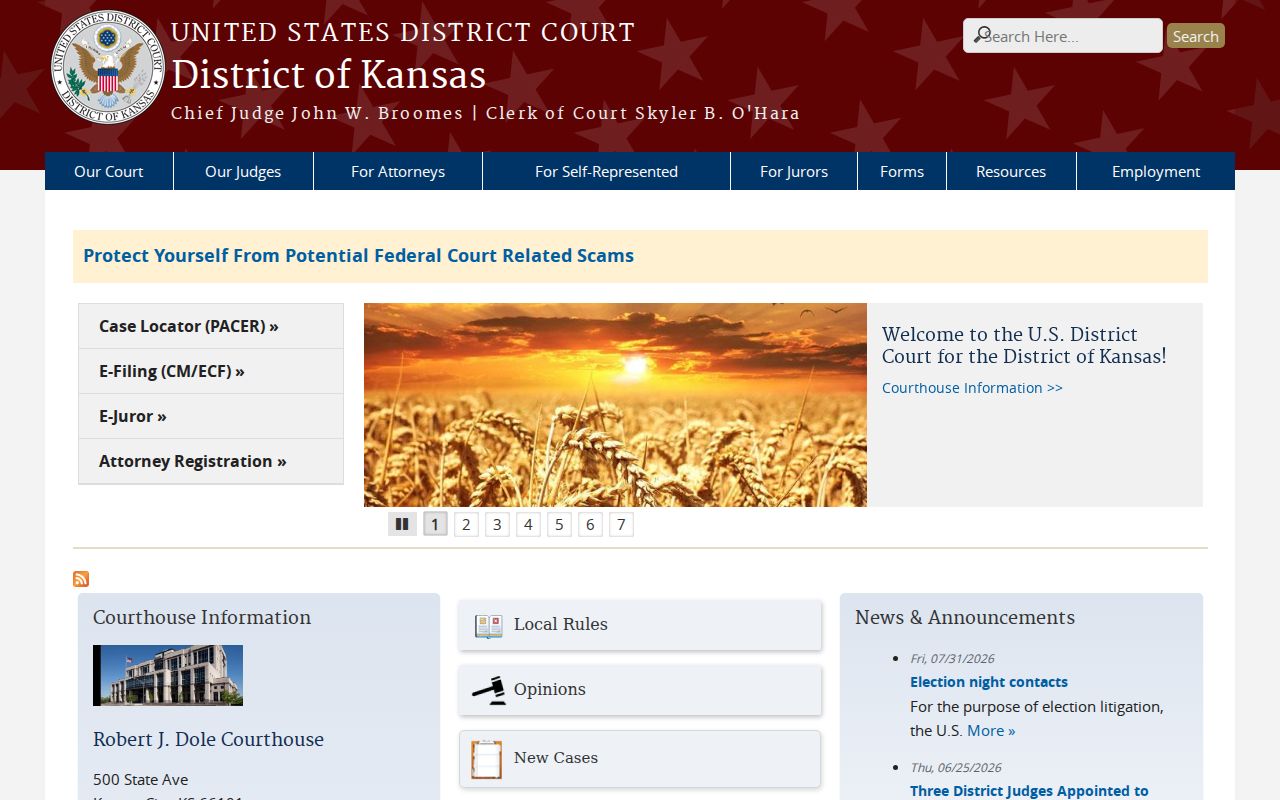
Kansas divides its civil work between state courts and the federal system. A search that comes up empty in Kansas CaseSearch only means the Ottawa County state docket has nothing under that name. It says nothing about a separate federal case. That case lives in a different court entirely.
The federal judiciary keeps its own public docket through PACER. An account is required. Federal rules allow fees for access.
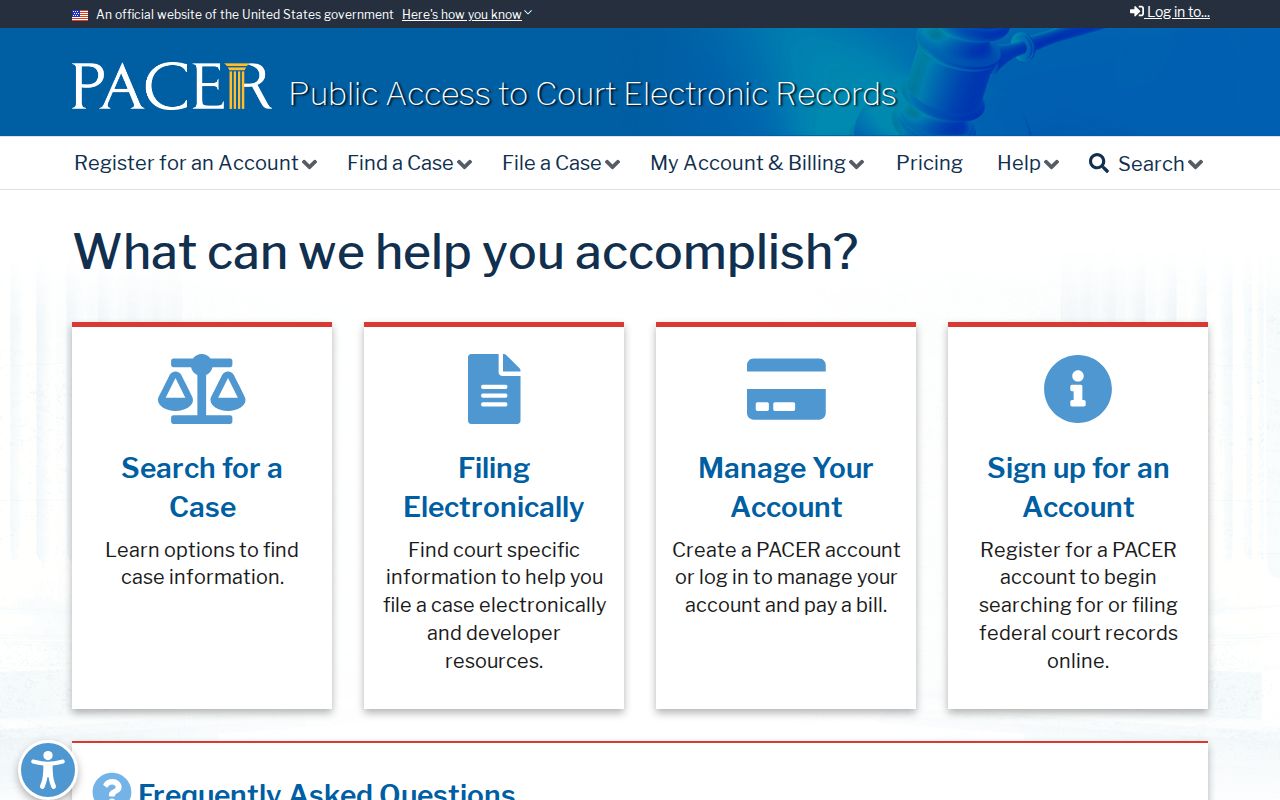
On PACER you can pull federal case numbers, party names, courts, and filed documents. It is a federal tool. It does not serve as a second screen for Ottawa County District Court records. A state civil docket search still starts with the state system.
A federal appeal out of Kansas goes to the U.S. Court of Appeals for the Tenth Circuit. That court keeps its own docket.
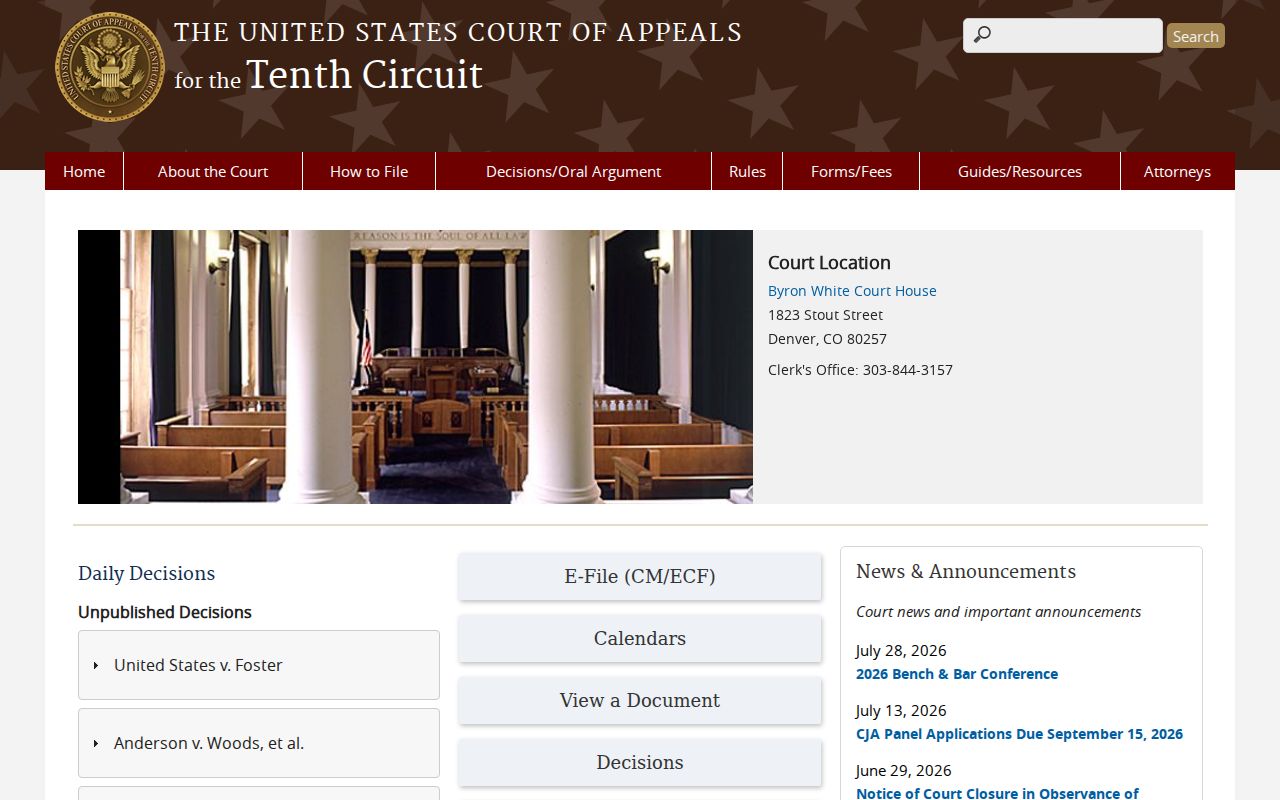
That appellate docket sits apart from both Kansas CaseSearch and the Kansas appellate portal. Each court keeps records in its own official system, so a complete case lookup means searching each one where the case actually lives.
Public Access to Civil Dockets
Access to Ottawa County civil dockets runs through Kansas Supreme Court Rule 22. It covers both courthouse terminals and electronic viewing. Guests see basic case information. Anything beyond that requires approved access, granted by role. One more quirk: filings older than the eCourt era may never have made it online. Anyone may still read them at a terminal in the courthouse. So a missing PDF in the docket search does not mean the filing is sealed.
Some case types carry extra protection. Domestic relations, protection orders, child welfare, probate, and mental-health dockets can all hold details the law keeps private. The Smart Search guide marks certain converted or sensitive cases as unavailable online. The clerk of the district court can answer that. Ask whether basic metadata or a public portion of the record can be released. What you should never chase is sealed family or financial information.
Ottawa civil access chain: Search CaseSearch, inspect the courthouse terminal, call or visit the clerk, then submit a specific written request for a public document.
One caution: a portal printout is not a certified copy. Ask the clerk what official version exists and request a fee estimate first. Ottawa County posts no current copy or certification rate schedule, so do not assume any dollar amount.